
+Amunt
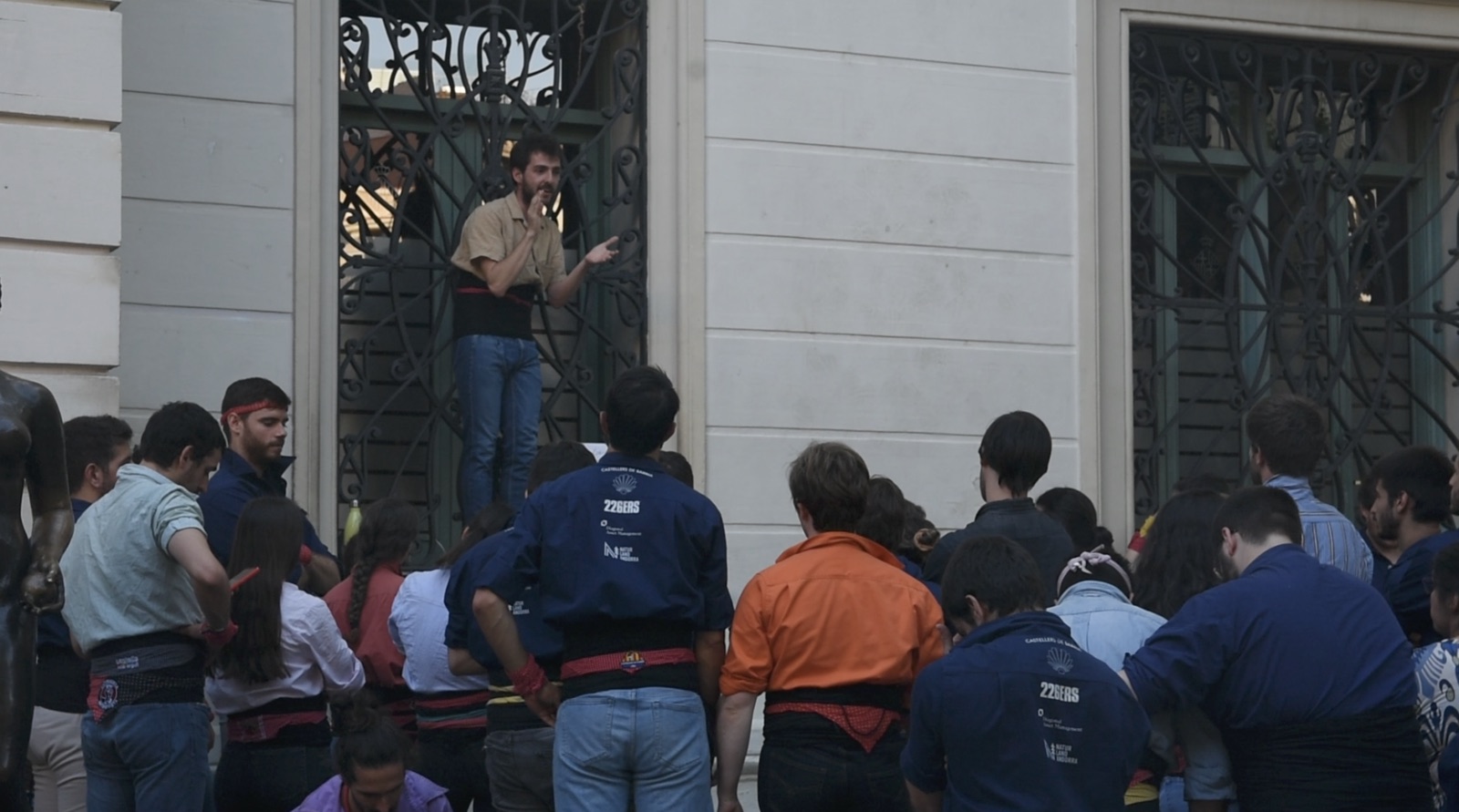
Casteller context. This photograph does not show the +Amunt device in operation.
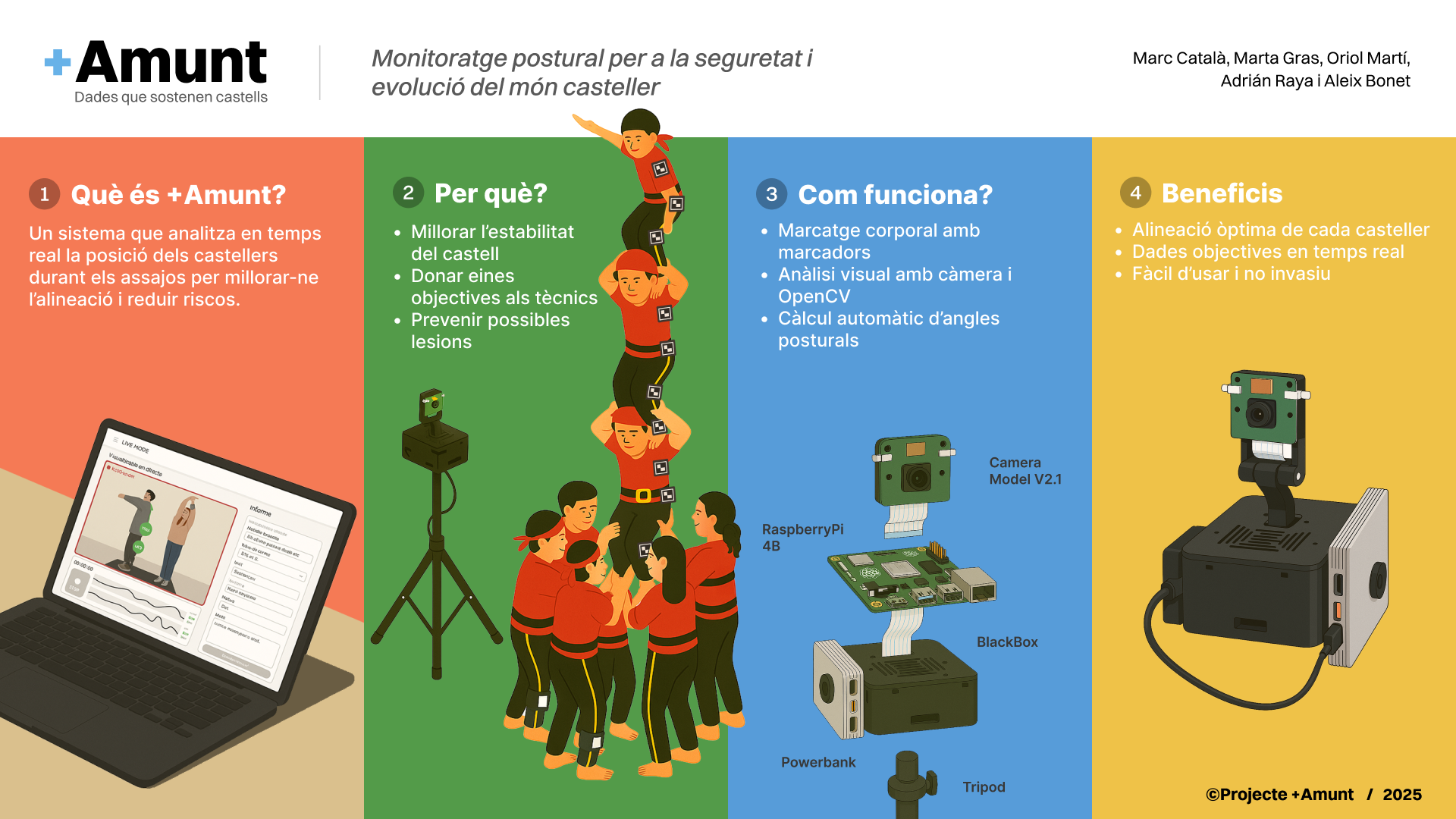
+Amunt is a capture and posture analysis system developed by a team as an academic project to provide technical support during casteller rehearsals.
Using computer vision and a purpose-built device, the system detects castellers’ posture and turns movement into information for observing alignment, deviations and postural changes objectively.
A practice rooted in experience and observation.
Castells are built on accumulated knowledge, observation, experience and rehearsal. +Amunt explores adding a new layer of objective information to that process through visual posture analysis.
The system is not intended to replace the judgement of the cap de colla or the team’s experience. It is a complementary tool for observing patterns or deviations that may be hard to see unaided.
Observable information about the body.
The system detects key points on the body and tracks how they change during the exercise.
From that structure, it can observe body alignment, torso inclination, symmetry and asymmetry, and possible postural deviations throughout the exercise.
From capture to feedback.
A camera captures the casteller’s movement and the system identifies key body points using pose estimation.
These coordinates can be used to analyse postural relationships and display the result in an interface designed for easy reading during rehearsal.
Capturepose estimationanalysisvisualisation
A unit built for rehearsal.
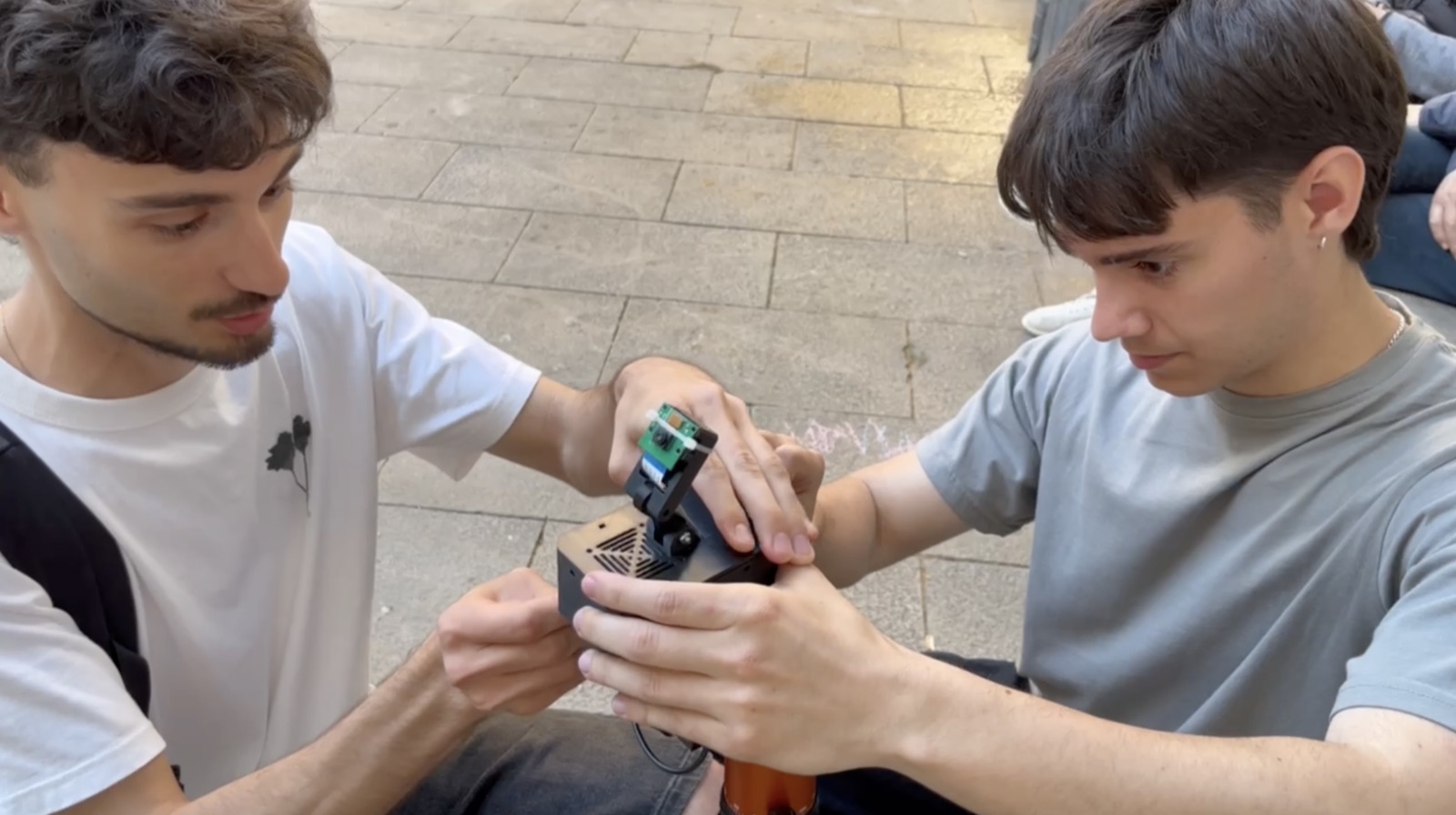
The prototype was conceived as a standalone unit able to capture, process and share information over its own local network, without relying on an external internet connection.
A Raspberry Pi processes the image from an OAK-D camera locally, creates its own Wi-Fi access point and serves the interface to a tablet. The whole system sits inside a 3D-printed enclosure.
Making data understandable.
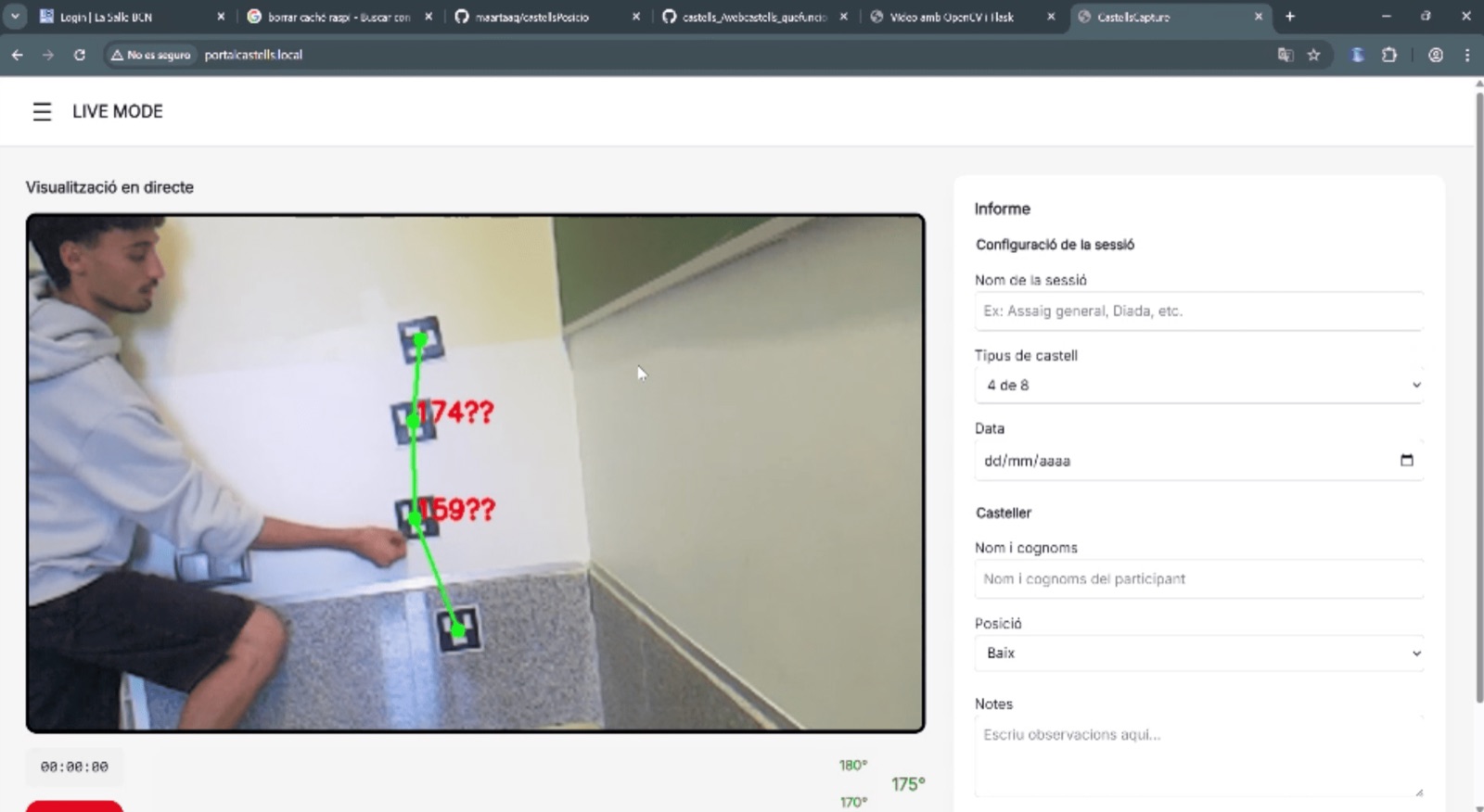
Rather than showing raw data or coordinates, the interface turns the detected skeleton and posture into a more direct visual reading.
The aim is to support quick interpretation during rehearsal and turn posture analysis into useful visual information for the team.
Local processing, accessible reading.
The OAK-D camera sends the capture to the device. Python, OpenCV and MediaPipe process the image and estimate posture; the system then analyses observable relationships within the body.
A Flask server shares the result with the tablet interface over the local network created by the Raspberry Pi. A 3D-printed enclosure brings the components together in one physical prototype.
Raspberry Pi · Python · Flask · OpenCV · MediaPipe · OAK-D · 3D printing
Cameralocal processingpose estimationanalysisFlask serverinterface
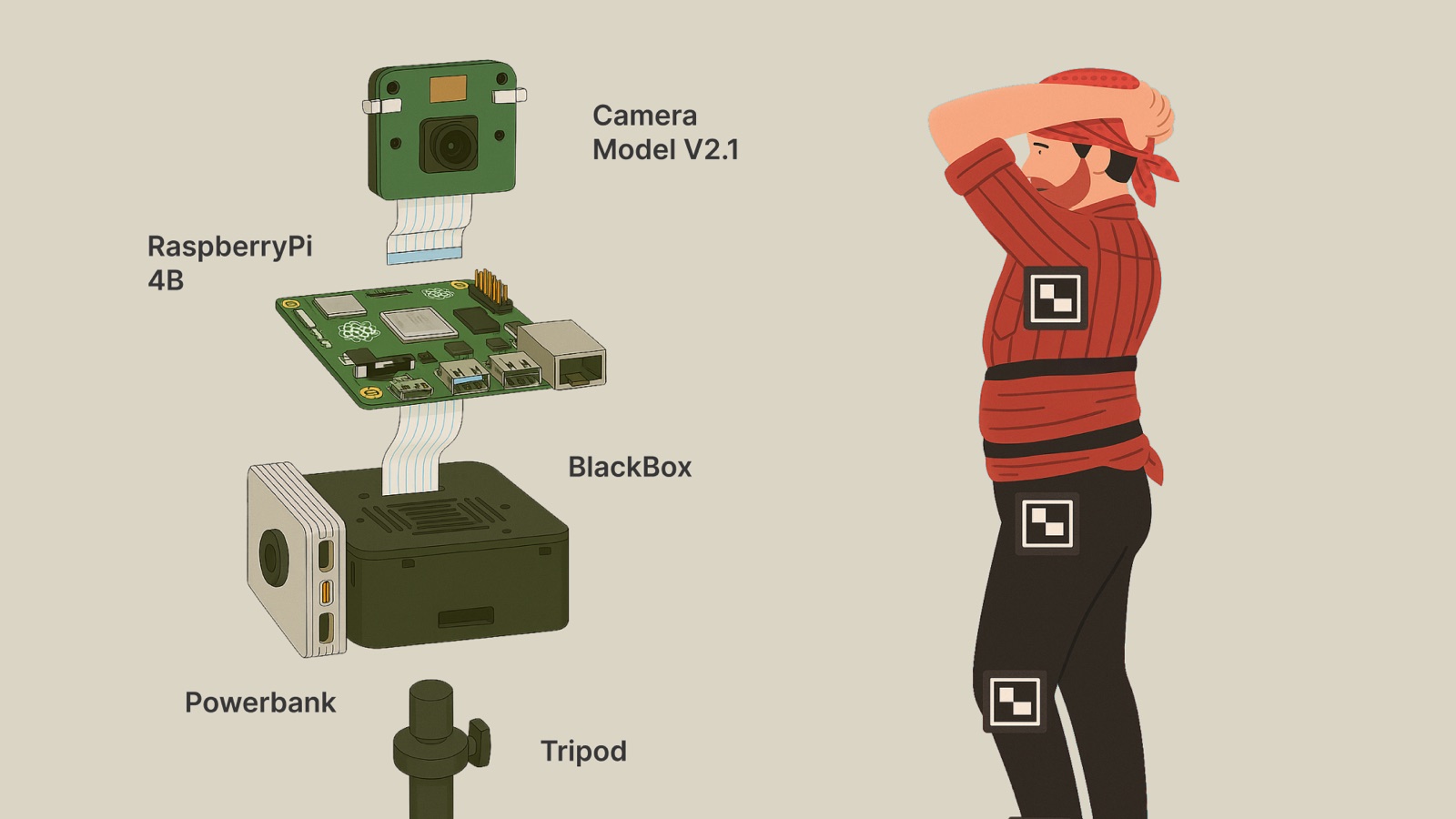
An integrated proof of concept.
+Amunt was developed as a functional prototype to test how computer vision could be applied to posture analysis during a casteller rehearsal.
The result brings together capture, pose estimation, local processing, its own network and visual feedback in a single physical system.
Academic project team.
- Marta Gras
- Marc Català
- Aleix Bonet
- Oriol Martí
- Adrián Raya
Mentorship
- Víctor Barberan