
Humans
Shared music. Different ways of feeling it.
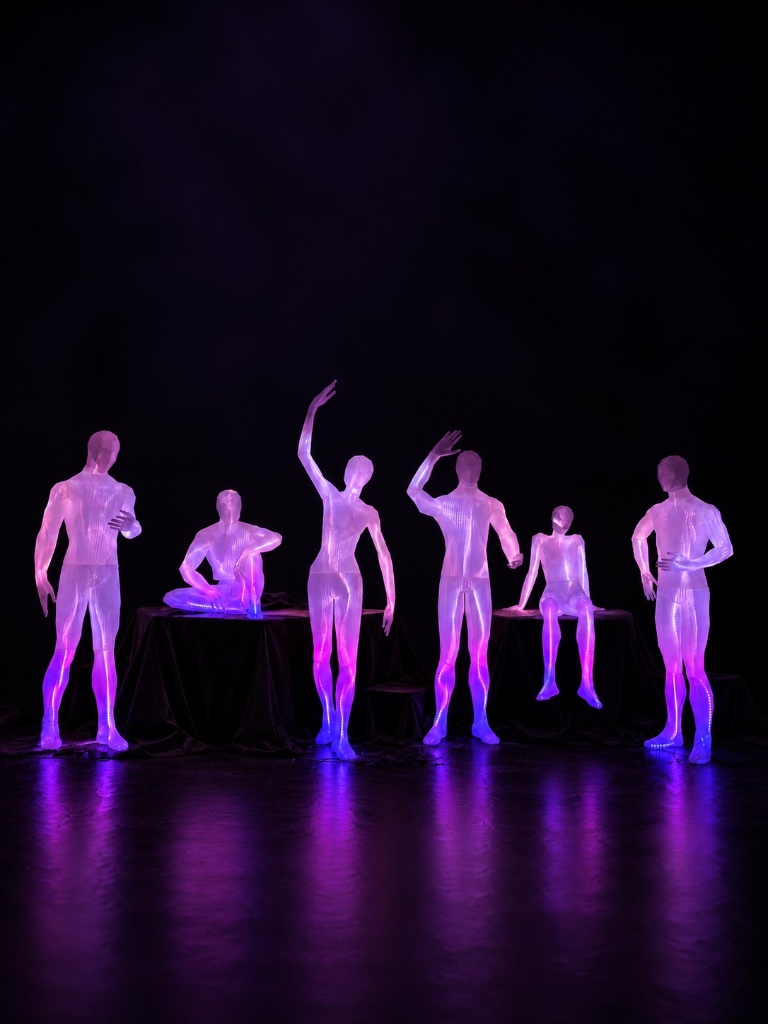
The same sound moves through the group. Each body makes it visible in its own way.
Humans brings human sculptures in different poses into a shared space. Light rises, pulses and changes intensity like an equaliser: an image of emotional shifts and the different ways people experience the same moment.
One group, many voices.
The figures share a musical stimulus without losing their individuality. Colours, rhythms and intensities may differ; they can all act at once or pass the light from one figure to another.
The installation combines response to music, designed choreographies and audience input. The movement of light creates a collective reading while leaving room for each figure.
One soundmany rhythmseach body
Designed to let light through.
Poses are designed and digital models adapted to prepare the figures for 3D printing and internal LEDs. Sculptural form, room for components and the path of light are considered together.
The aim is a translucent white surface that diffuses light so the body reads as a luminous volume. Surface and volume contribute to the animation as much as the electronics inside.
Drawing light on the model.
We developed custom Blender addons to define the LED strip paths on each figure and represent the LEDs in 3D. The order, sections and direction of the virtual model match the physical assembly, allowing an animation to travel across the body as intended.
From this environment we organise control by figure, design and preview behaviours, and send light data in real time to the ESP32 controllers driving the addressable LEDs.
Digital modeldesigned lightsculpture
Light control volumes
We call them brushes: virtual volumes that determine how each LED lights up according to its position. They let light rise through the body, create pulses and modulate intensity without programming each point by hand. Each sculpture can have its own colour, level, speed and timing offset.
The choreography listens to the audience, too.
Audio analysis lets light vary with sound. At the same time, programmed sequences define deliberate movements and rhythms between figures: music alone does not determine the whole animation.
A DDR-style platform turns footsteps into control inputs. Depending on the setup, visitors can trigger light pulses, change colours or alter behaviours. They step, and the sculptural group responds.
Musical response
Light varies with the audio signal.
Choreography
Purposefully designed light sequences.
Interaction
Footsteps change the behaviour of the group.
A foundation for other compositions.
The control system allows colours, rhythms, choreographies and the relationship between music, light and participation to be adjusted. It also gives each figure different behaviours.
Changing the arrangement of sculptures or working with other poses and LED paths requires remapping and, where needed, fabrication and assembly. This configurable foundation creates room to explore other compositions and installations.
Humans
Project
TRENA Interactive · 2026
Disciplines
Sculpture · digital fabrication · electronics · light animation · interaction
Planned presentation
MIRA, Barcelona · 6–7 November 2026
Tools
Blender · Python · custom addons · ESP32 · addressable LEDs